
When Is a Summative Evaluation Required Under IEC 62366-1:2020?
A common usability question we receive is: in what instances is a summative evaluation not required for a new device? We also frequently encounter submissions with rationale stating that a device is low risk and therefore no summative evaluation was necessary. This article outlines what the IEC 62366-1:2020 usability standard says about when a summative evaluation is required. Note that this article does not address user interfaces that were designed and developed prior to the publication of IEC 62366-1:2015.
The Core Principle: Hazard-Related Use Scenarios
Whether a summative evaluation is required hinges on whether the device has any hazard-related use scenarios. The answer to that single question determines the obligation.
IEC 62366-1:2020 Clause 5.3 requires manufacturers to identify the hazards and hazardous situations associated with a device. Building on that, Clause 5.4 requires the manufacturer to identify and describe the reasonably foreseeable hazard-related use scenarios associated with those hazards and hazardous situations. A hazard-related use scenario is defined as a “use scenario that could lead to a hazardous situation or harm.” Importantly, IEC 62366-1 addresses both hazardous situations and harm as they relate to usability, not harm alone.
Hazard-Related Use Scenarios vs. FDA Critical Tasks
For those familiar with FDA’s usability guidance, there is a key distinction worth understanding between the “hazard-related use scenario” of IEC 62366-1:2020 and the “critical task” of FDA’s usability guidance. These two concepts are related but distinct in their framing, scope, and purpose.
A “critical task” is harm-centric: the task is critical because of the severity of its potential consequences. A “hazard-related use scenario,” by contrast, is hazard-linked rather than harm-gated. Any use scenario associated with a hazardous situation qualifies, not only those where potential harm is severe. Severity can, however, inform prioritization for usability evaluations downstream in the IEC 62366-1 process.
Understanding this distinction matters because it affects the scope of what must be evaluated. In practice, FDA critical tasks and IEC 62366-1 hazard-related use scenarios substantially overlap, and a harmonized program often maps them together. A critical task will almost always be embedded within one or more hazard-related use scenarios identified under IEC 62366-1. That said, IEC 62366-1’s scope is wider at the identification stage: a use scenario involving a moderate hazard may meet the hazard-related use scenario threshold even if it would not qualify as a critical task under FDA’s framework.
When Is a Summative Evaluation Required?
A summative evaluation is required whenever one or more hazard-related use scenarios have been identified. The only circumstance in which IEC 62366-1 does not require a summative evaluation is when no hazard-related use scenarios exist.
Once hazard-related use scenarios have been identified, Clause 5.5 requires the manufacturer to select which scenarios to include in the summative evaluation. Three selection options are provided:
- All hazard-related use scenarios
- A subset based on the severity of potential harm
- A subset based on severity and other circumstances specific to the device and manufacturer (for example, selection based on risk levels where supporting data exists and the selection scheme and rationale are documented)
One point worth emphasizing: a subset does not mean none. Even a single identified hazard-related use scenario technically requires a summative evaluation to be performed.
To help determine whether a summative evaluation is required, the following decision path may be useful:
Has the manufacturer identified any hazard-related use scenarios?
- Yes → A summative evaluation is required. Select scenarios per Clause 5.5 and proceed.
- No → A summative evaluation is not required. Document the rationale thoroughly.
Methods for Conducting a Summative Evaluation
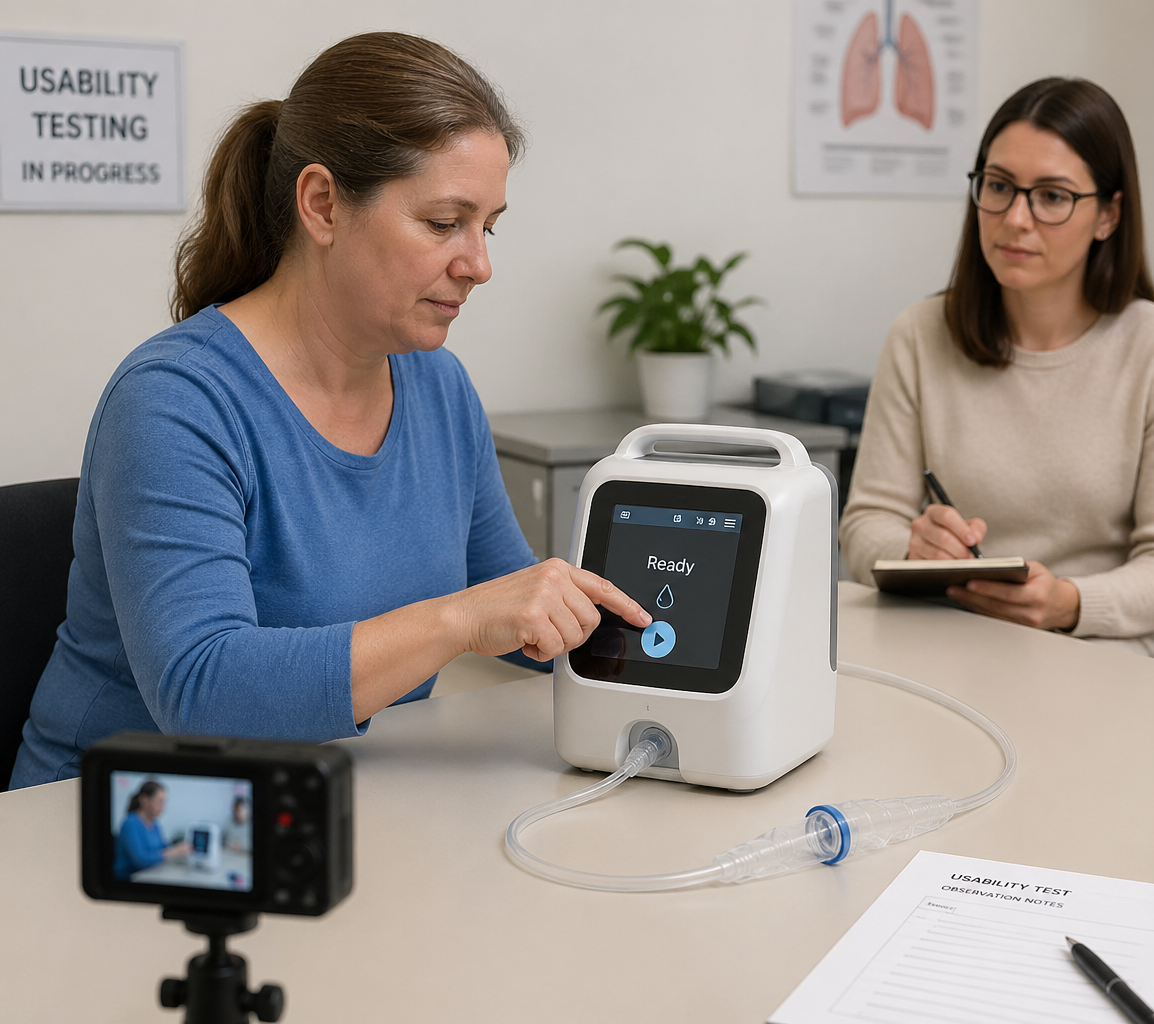
A summative evaluation most often involves a usability test conducted under simulated-use conditions. However, other methods are available and are outlined in IEC TR 62366-2 (2016), Table E.1. To provide an example, in circumstances where simulating use is not practicable and conducting a test in actual use would be unethical, alternative approaches are warranted.
In conclusion, the usability engineering process described in IEC 62366-1 is designed to reduce use errors that can cause hazardous situations. If a use error has the potential to cause a hazardous situation, the standard intends for that use error to be subjected to the full usability engineering process, including summative evaluation. Manufacturers claiming that no summative evaluation is needed should ensure their documentation clearly supports a finding that no hazard-related use scenarios were identified, as this is a high bar that a low-risk characterization alone does not satisfy.